After the murder of Dana Seetahal earlier this month, one reporter, Mark Bassant, was doggedly pursuing the story. Now, the journalist attests that his life has been threatened because of his investigative reporting.
The Activized blog has not taken well to the news. In a post entitled#PROTECTTHEPRESS, the blogger, Brendon O’Brien, interprets the significance of what that means for the country:
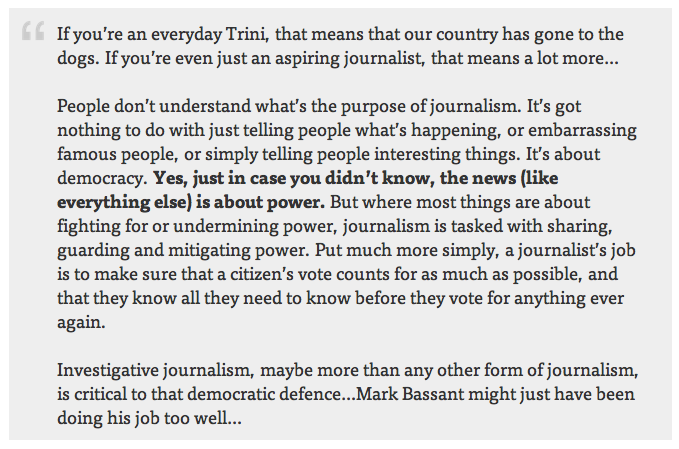
The post explains why Bassant could have become a target:
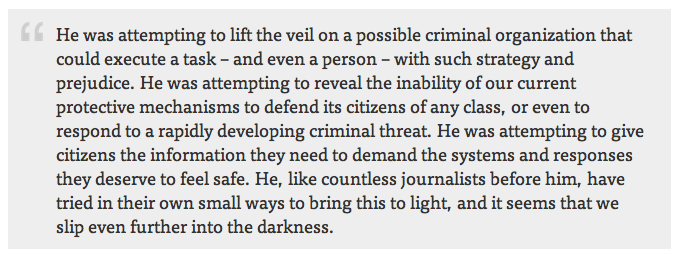
The blogger places the blame squarely at the feet of the government – and not solely because of the administration’s inability to harness the crime problem:
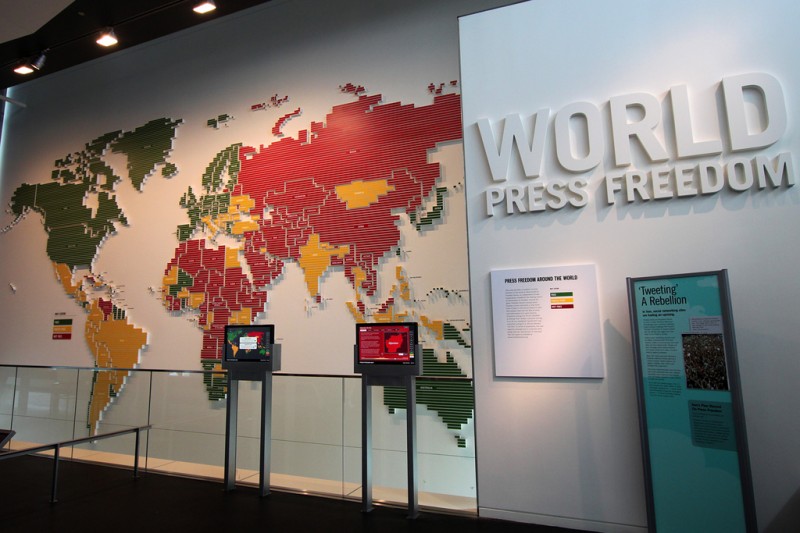
World Press Freedom map, at the Newseum in Washington, DC. Photo by Mr.TinDC © Some rights reserved.
O’Brien continues:
If our journalistic integrity and safety is compromised, there is no tool to retain order in the constant sociopolitical power struggle that the common man often doesn’t get to participate in. But, also, if the powers that be are failing to mitigate the threats to their own people and power, then journalists aren’t safe to search for the truth at any rate.
The blogger remains firm in his conviction that no matter how critical the media is of the government, press freedom should remain unfettered:
The news has not been friendly towards the government. It should not be expected to, to be honest. Its job is to show us who these people are, let us know what they’re doing, and let us decide whether we are okay with it.
He also places blame, however, on the citizenry:
Part of the problem is, we’re still not making the decisions that protect our own democracy. We’re not displeased enough with the news to make sure that journalists don’t have to tell these stories any more. So, for our sake, journalists still tell those stories. They do their job, no matter how potentially unsafe it gets (and for Trinidad it’s getting much worse). And that’s how Mark Bassant got to the place where he had to report on a Senior Counsel getting gunned down on her way home. And that’s how he got to the place where he has to fear his own life in his own home country. So we can defend our rights in our own home country.
O’Brien has some next-step suggestions:
There are a lot of things that need to happen now. Our government needs to (finally) create strategies that prevent organized crime from seizing its own power and challenging the social contract that citizens have made with their democracy. At the same time, that democracy needs to keep its part of the social contract bargain. With or without that, the citizens of this country need to respond to inconvenient truth not with apathy, but with enthusiastic disgust. It’s our job to fight back and demand more or better when we are provided with information that proves that we are getting less than we deserve.
He ends with a metaphor:
Democracy is our vehicle towards a life of peace and prosperity. It’s already bad enough that our engine is leaking and our airbags and seatbelts don’t work. What we do have is a monitor that is telling us exactly what’s wrong. And we’re not listening. And it may cost us the entire ride home…
This article was originally published on Global Voices.






