
One story that has emerged in the “weird news” sections of many online news outlets over the past few days is the news that a Nigerian woman disowned her cat for displaying ‘homosexual tendencies’. The woman from Lafia, a town in central Nigeria, became concerned after she noticed her cat making advances towards other male cats and subsequently cast the feline out of her home claiming she found his behaviour to be “disturbing and a contradiction of the laws of nature”.
The Nigerian Same-Sex Marriage Prohibition Act
The above “story”, while amusing at first glance, comes amidst the news that Nigeria’s president, Goodluck Jonathan, recently signed a Same Sex Marriage Prohibition Act. This has resulted in Nigeria regressing into one of the most punitive and comprehensive anti-homosexual regimes in the world.
Apart from reinforcing bans on public displays of “same-sex amorous relationships”, the act also criminalises gay marriage with a punishment of up to 14 years imprisonment. It allows for up to 10 years imprisonment for membership of gay clubs, societies and organisations. The act features incredibly invasive provisions towards homosexuals and has been criticised by US Secretary of State, John Kerry, for “restricting freedom of assembly, association and expression for all Nigerians.”
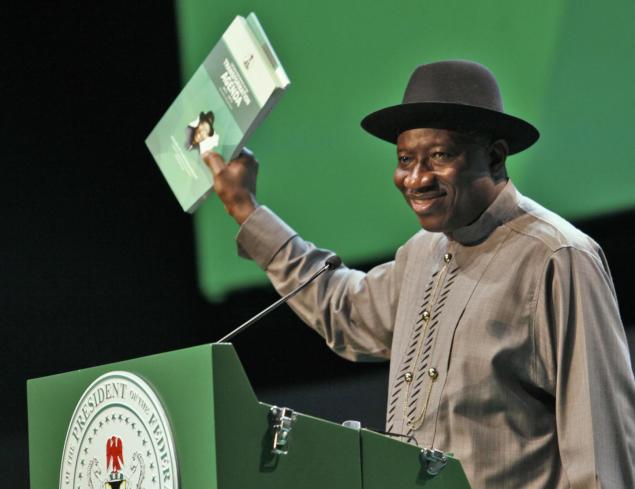
Image via news.naij.com
The passage of the acts has seen a swathe of arrests of Nigerians suspected of being gay and even mob violence in certain areas. Its roundly positive reception among the Nigerian public has been in stark contrast to the widespread condemnation the act has received internationally. Several prominent Nigerian politicians have been keen to claim that such provisions have widespread support amongst the Nigerian public in which they are serving, concocting an “Us v Them” narrative in which the Nigerian government is simply trying to reinforce African cultural norms in the face of Western cultural imperialism.
Hate In The Face Of Political Adversity
In reality, the legislation is most likely a smokescreen to deflect attention away from so many of the issues currently plaguing the country and causing a pain in the backside for it’s leaders. Endemic corruption has continued to plague Nigeria at both federal and local level and has stunted it’s development. It has become increasingly clear that Jonathan’s government has not dealt with the issue effectively, despite his promises to vanquish corruption being an integral part of his election campaign.
Many of the Northern States in Nigeria have been ravaged by constant attacks at the hands of the radical Islamist terrorist group Boko Haram, the country is experiencing rapidly increasing inequality and is struggling with militancy and severe environmental damage in the oil producing Niger Delta region. By capitalising on people’s prejudices and focusing on an issue that had until recently, barely featured in much of the country’s major political discourse, it is clear that the Jonathan administration wishes to draw the Nigerian public’s attention away from the fact that he has failed to adequately address many of the aforementioned issues in the hope of garnering cheap popular support in the year leading up to next year’s presidential election, an election that many of the people in his own party do not want him to contest.
The fact that the attempts of one of Jonathan’s predecessors, President Obasanjo, to implement a similar bill in 2007 were largely interpreted as an appeal to popular sentiment due to being introduced at a time when his political capital was particularly low, also adds credence to the argument that the main purpose of this legislation was to act as a political smokescreen.

Of course Nigeria is not the only nation to have attracted international scrutiny for laws which have been deemed as homophobic. In June last year Russia implemented new laws which outlawed “homosexual propaganda”. Much like the Nigerian legislation, the laws have been widely criticised by the international community. There has been particular focus around the fact that the laws have been adopted in a country which has just welcomed the world to it’s doorstep for the Winter Olympics.
Perhaps more worryingly, however, is the negative impact the act has already been having on the everyday life of gay and lesbian Russians since it has come into force. A Channel 4 documentary which aired recently highlighted the violence and intimidation that gay Russians have had to face at the hands of hate groups such as Occupy Pedophilia and Parents Of Russia. Many feel that the propaganda laws have been incredibly influential in inspiring and legitimising this violence.
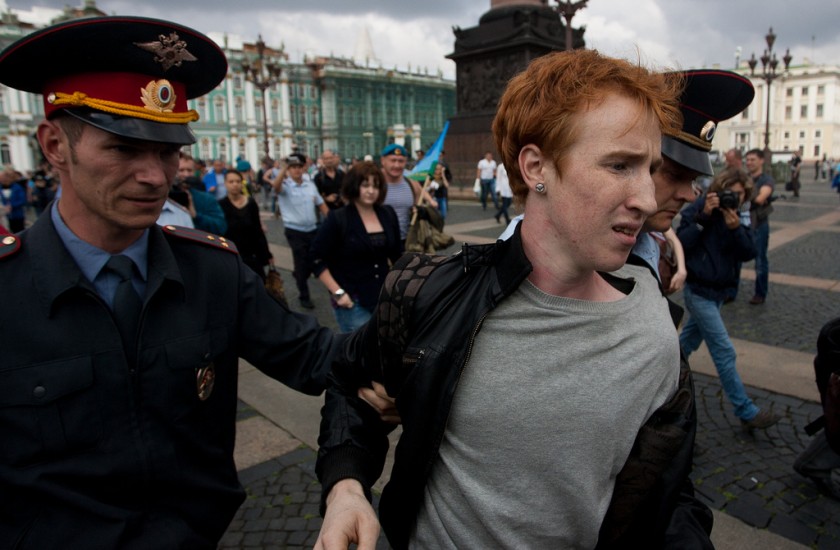
In addition to this, the BBC has reported on the rising prevalence of homophobia in the Russian media in recent months, noting that the use of main pejorative terms used to refer to homosexual people in Russia has increased ten-fold. The report describes how the law has successfully transported homophobia into the forefront of public discourse in Russia, seemingly out of the blue.
Much like Nigeria, it is not difficult to see these laws as a fleeting distraction to divert attention from the difficulties the incumbent governments are facing. Russia, like Nigeria, is another country which suffers from chronic and endemic corruption which shows no sign ending soon. Despite Russia enjoying economic growth while the rest of Europe wallowed in the pits of the economic recession, the growth has masked a highly fragile economy that many economic experts argue is too heavily dependent on oil and gas revenues and the State pumping money into the economy to fuel consumption.
In addition, many Russians are extremely dissatisfied with poor public services and governement performance in general, showing that despite what Putin would have the world believe, everything is not all gravy in Russia. His administration may be hoping that a healthy dose of state sponsored homophobia or an extravagant Winter Olympics may be the best way of diverting attention away from that fact.
Even Britain Is Joining In On The Act
Despite enjoying democracy for a considerably longer time than both Nigeria and Russia, it seems that even the British government is also partial to capitalising on public animosity towards a marginalised group in society in order to draw attention away from their own failings. This time around their chosen target is immigrants.
The topic of immigration has never been far from the government’s mouth over the past month or so, as evidenced by the Conservatives displeasure at the lifting of EU restrictions over the movement of Bulgarian and Romanian citizens and the attempts to rush through a new Immigration Bill which aims to seriously clamp down on “mass immigration” into the UK. The proposals are once again a smokescreen for a government that has long struggled for widespread popular approval.
It is easy to see why the government are so happy to capitalise on the topic of immigration. Why try to implement a ‘living wage’ and address a widely publicised “cost of living crisis” when you can simply blame immigrants for driving down wages with their low wage demands? Why properly address concerns that severe cuts to public spending are having negative effects when you can simply blame immigrants for putting increased pressure on public services?
What’s The Big Deal About All This Anyway?
The actions of the British, Nigerian and Russian governments are problematic for a number of reasons. Firstly, because they resemble a cowardly playground bully who attempts to divert his classmate’s attention from the fact that he wore his school uniform on mufti day by encouraging everyone else to pick on the weedy little kid who is the regular victim of classroom scorn for the majority of the year.
In addition to making marginalised groups in society feel even more alienated than they already are and by capitalising on these issues for cheap, short term political gains, they end up simplifying very complex social issues. It is when these complex social issues are used in such a manner that they become mixed up with prejudice and misinformation rather than facts and compassion and both the minority group being targeted and the majority population are robbed of meaningful conversation that can help their society develop in a harmonious way.
This article was originally published on Urban Times.
About the Author





