
The Dilema
With a projected 8.5 – 10 billion mouths to feed by 2050, attention is increasingly being focused on how we can meet our future food needs. Income levels andurbanisation are also set to increase, placing added demands on food production systems. In fact, the Food and Agriculture Organisation believes that we will need to increase net food production (production of food stuffs excluding biofuels) will need to increase by 70% by 2050.
Olivier de Schutter, United Nations Special Rapporteur on the Right to Food, in his recent report suggests that States need to reorient “their agricultural systemstowards modes of production that are highly productive, highly sustainable and that contribute to the progressive realization of the human right to adequate food”. However, traditional approaches to improving agricultural productivity (e.g. breeding high yielding crops) have not typically benefited the poorest farmers and the report proposes a new model of agricultural development more closely linked to Mother Nature, ‘agroecology’.
Agroecology
Agroecology takes a whole system approach to the food system and draws on traditional knowledge, alternative agricultural practices and local food system experiences. The simple farming techniques increase crop yield by promoting beneficial interactions between soil, nutrients, crops, pollinators, trees and livestock. By reducing farmers’ dependence on external products, such as fertilisers, and state subsidies, agroecology can help alleviate rural poverty.
Using agroecology approaches, average increases in crop yields of nearly 80% were achieved in 286 projects in 57 countries. In addition, reports suggest that agroecology has the support of farmers, because it provides beneficial features, such as shade trees, as well as reducing negative aspects of farming, such as chemical smells.
Interest in Agroecology is not confined to developed countries and poor rural farmers. In Japan, introduction of wheat and barley cover crops to watermelon fields has been used to control weeds, thereby reducing labour costs. Another agroecology approach attracting attention is biological pest control, where traps or even other insects, are used to control pests on food crops instead of relying on insecticides.
Click Here for the World Interactive hunger Map
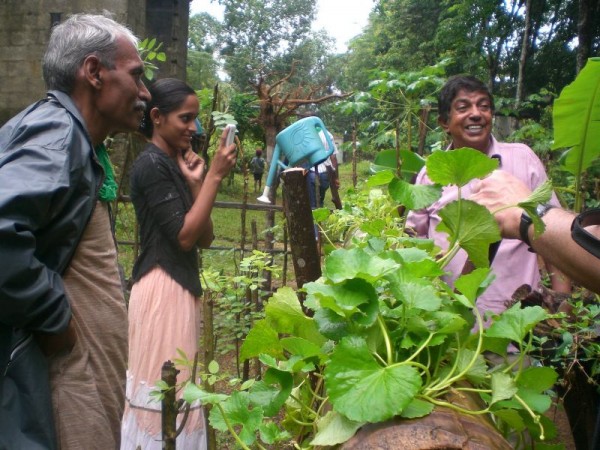
The Via Campesina (LVC) organised an Asian Agroecology Encounter from 18 to 22 May, 2010, hosted by the Movement for Land and Agricultural Reform (MONLAR) at the Community Education Centre (CEC), in Colombo, Sri Lanka. This was attended by practitioners, promoters and trainers of sustainable agriculture from LVC organizations in eight countries in East Asia, South East Asia and South Asia. Source: http://viacampesina.org
This article was originally published on Urban Times.






Excellent article in due time for World Food Day. The world was active on that day!
In Ecuador, the National Agroecology Collective (a group of agroecological producers) teamed with several other groups to stage a march against GMO agriculture, which is about to enter the country despite a constitutional ban.
Read about it here: http://anadecuador.wordpress.com/2013/10/21/fighting-for-our-food-social-movements-unite-to-keep-gmos-out/