
The devastating effects of mass meat production and how the increasing demand for meat has changed the world.
Most people love meat and they always have, especially in Europe, meat can be found on consumers plates on a daily basis. In fact, in the last 50 years the worldwide meat consumption has increased fivefold, and this love for meat is now spreading into countries such as China and India. Even though the voices encouraging people to eat less of it get louder, most don’t want to listen, but as our environment continues to deteriorate and third world countries get poorer, maybe it is about time we think about our actions and their effects. What consequences does our decision to eat meat really have?
Health Problems
Recent studies suggest that an exaggerated meat consumption is linked to health problems, particullary red meat. A long-range study that examined the eating habits and health of more than 110,000 adults for more than 20 years found that “replacing meat with other foods seemed to reduce mortality risk for participants of the study”. Furthermore, the study suggests that if you want to eat red meat, you should eat unprocessed products and it should be reduced to two or three servings a week. Previous studies have also associated red meat consumption with diabetes, heart disease and cancer.
We can look to China as an example of how meat consumption is causing health problems. In the 1980s, the average person in China ate around 14kg of meat annually, today the average person consumes more than four times as much. This means that the traditional kitchen is becoming lost, their diet is changing and their health is suffering. Chinese doctors have associated more than 200 million cases of high blood pressure and cardiovascular disease with its meat consumption.
Animal Rights
As mentioned the demand for meat has never been bigger, the industry is therefore adapting in order to fulfil this resulting in more meat for less money with efficiency and profit put before moral and ethical behaviour. More and more fattening farms only care about efficiency and profit, they forget that the ‘products’ are actually living creatures. Poultry is fattened quickly – after hatching a chick weighs 40g, three days later its weight doubles and after one month it weighs 38 times as much. Dr. Michael Marahrens, of the German Federal Institute of the protection for animals, said:
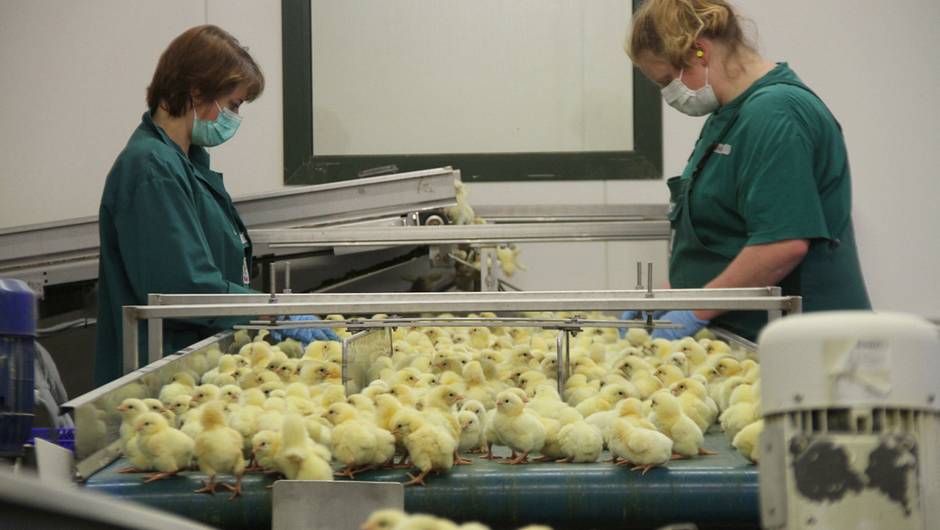
Image credit: NDR/heidefilm
At the end of the feeding process, many animals are unable to move, pumped full of antibiotics to prevent the animals from getting ill because of the dire living conditions, often cramped in with thousands of its fellow species. These antibiotics are also used to promote growth and weight gain.
Many animals spend their short lives cooped up in dirty stalls because it is more efficient. When animals live in free-range husbandry, the mortality rate is higher, therefore it is economic to keep the animals indoors. The European Union has put some guidelines in place for keeping pigs in an appropriate environment. The guidelines suggest that pigs need toys or at least some hay in their stalls in order to prevent them from becoming aggressive, but the reality is most companies do not follow the EU laws or stay just within the guidelines.
Even though the industry tries to tell us they treat the animals accordingly, there are devastating conditions in many slaughter houses. Sometimes the anesthetization of the animals fails and animals can regain consciousness whilst being cut or bled. The way animals are treated before slaughter can also be distressing and many well practiced slaughter methods are in-fact inhumane.
Farmers Welfare
Many people probably know of the shocking circumstances many animals in intensive lifestock farming have to live in, but do they know about the effects the meat production industry is having on other people around the world?
In 2012, the EU agricultural budget accounted for 60 billion Euros, which stands for 40 % of the EU budget. The European meat is therefore artificially cheapened due to the EU payments, subsequently this cheap subsidised meat is flooding the markets, so that farmers in Africa, for example, can’t compete with the prices and have to give up their businesses. For many Africans buying the EU alternative is far cheaper than to buy or produce their own thus destroying the local market.
Furthermore, the World Trade Organization and the industrial nations force the rest of the world towards the free movement of goods. A good example for this is when Ghana wanted to raise import tariffs on poultry in 2003 from 20% to 40% in order to protect local markets. This move was then rejected by The International Monetary Fund who then asked the government to reconsider this decision.
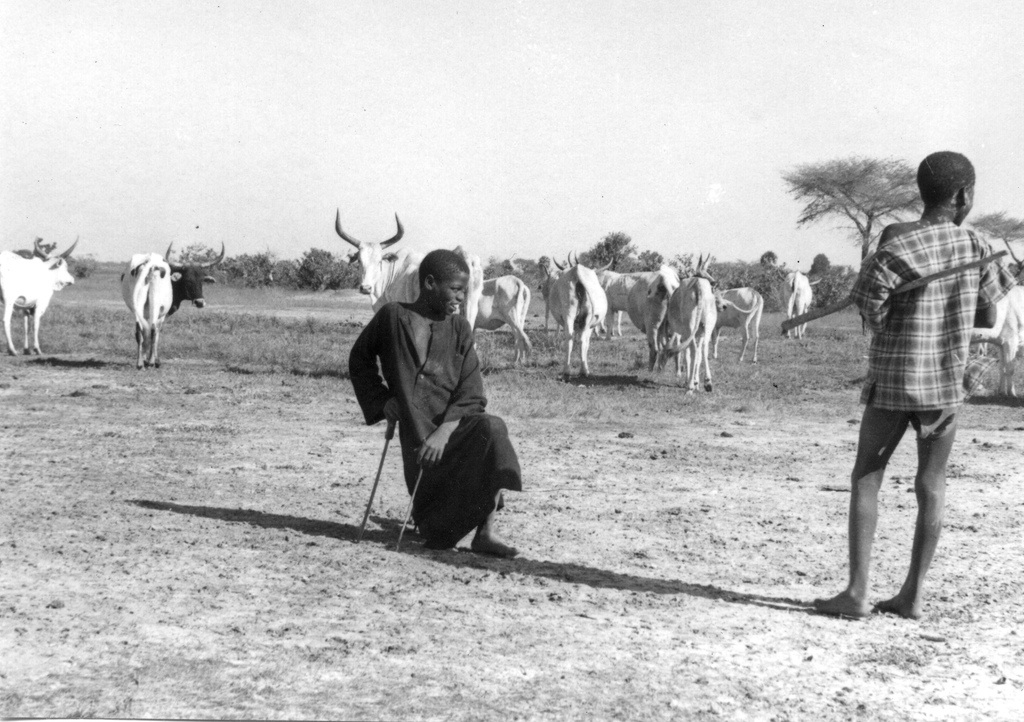
Young cattle herders in Sénégal. Image credit: John Atherton
It is not only importation that is causing problems, exportation also undermines the rights of farmers. As Europe produces in the region of 228 million tons of meat annually, the demand of feed is excessive: in order to get 1kg of meat, you will need 16kg of feed. But as agricultural land is rare in Europe, the feed often stems from countries like Paraguay in South America. Just a small number of entrepreneurs and powerful companies earn good money from the export, while the majority of local farmers suffer, seeing little or no benefit from these exports.
The land needed to cultivate the animal feed is also causing problems for local farmers and communities. Often soy plants, are planted in huge fields with the cultivation destroying the economic existence of local farmers. Many of them having to sell their land because the harvest on their small pieces of land is no longer worth while. This has led to poverty, hunger and migration to the cities. Furthermore, the cultivation of soy destroys the soil so that it is impossible to cultivate anything else on the same soil ever again. Even more devastating is the intensive use of an extremely poisonous pesticide on the feed. People that live close by are severely affected and children can die. A scientific study of the university clinic of Asunción verified, that in villages near soyfields, children are often born with deformities.
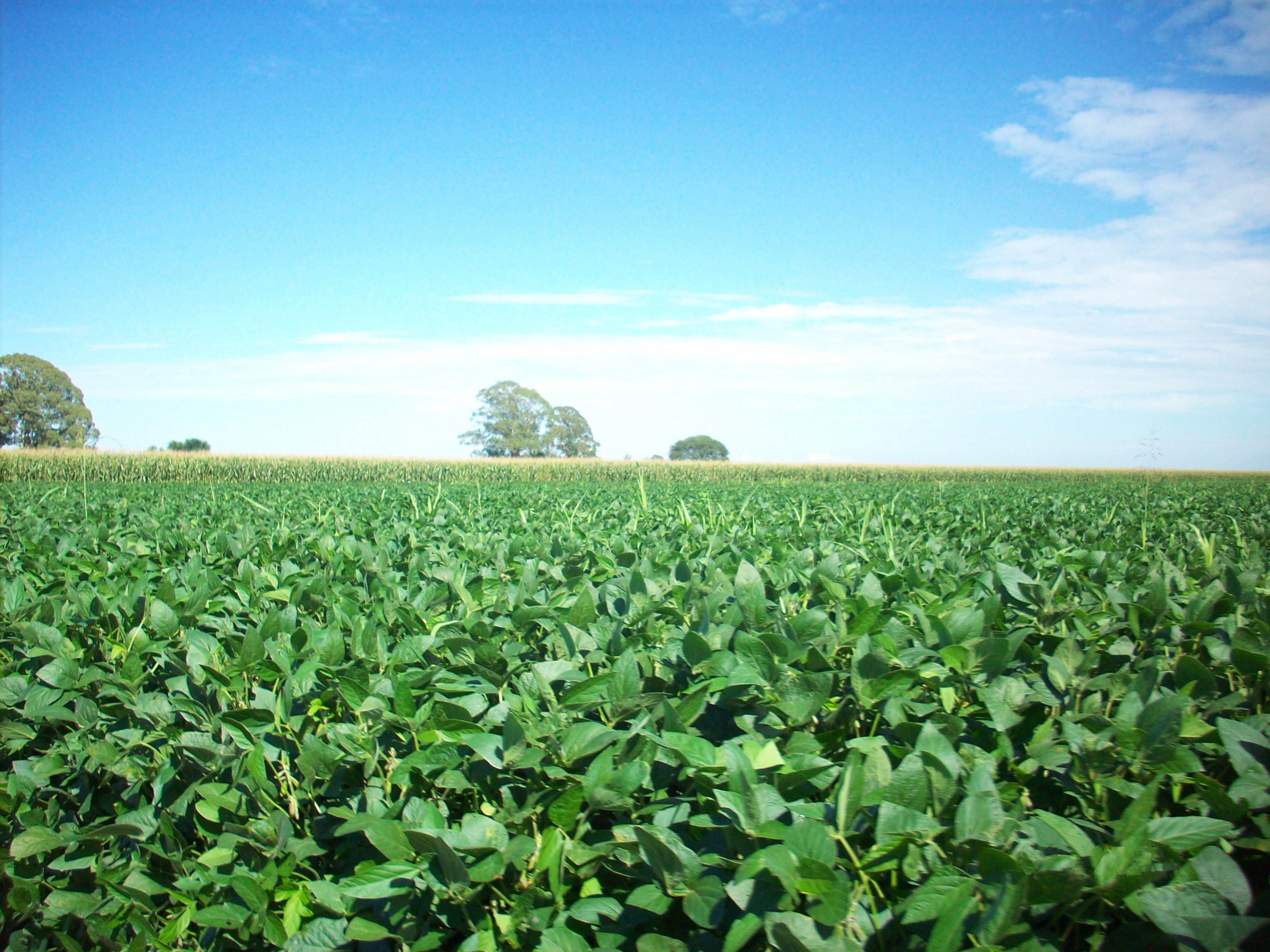
Soybean growing in an agricultural field. Runciman area, south of the province of Santa Fe, Argentina
A major problem is that the European Union doesn’t act. It seems as if they only believe in the sentence: “The market decides”. However, the extensive meat industry is also affecting European countries negatively.
A bigger demand for meat means that more animals are held in intensive lifestock farming and this means that there’s more liquid manure, which is then sprayed onto the fields. It is scientificely proven that this is forming ecological burdens. The soil and the groundwater are becoming contaminated and regulations are exceeded.This can lead to the emergence of carcinogenic substances and blue-baby disease, where high nitrate levels in the water can lead to a decreased oxygen carrying capacity in babies and can ultimately lead to death.
Global Warming
Apart from dirty water and dead soil, there is another dangerous effect of the meat industry – global warming. The UN’s Food and Agriculture Organisation has estimated that meat production accounts for nearly a fifth of global greenhouse gas emissions. These are generated during the production of animal feeds, for example cows emit methane, which is 23 times more effective as a global warming agent than carbon dioxide. The only way to improve this is to reduce the number of animals and therefore our overall meat consumption. It is said to make a huge difference to climate change to have one meat-free day a week. Also, the issue where the meat comes from should be considered. If we all stopped buying imported food, we’d save a huge amount of carbon emissions.
While some people predict that meat consumption will double by the middle of the century, we must consider the consequences with urgency. The world and its’ people have to live with poverty, the destruction of local markets, global warming, the destruction of soil and forests, the wrong treatment of living creatures and health problems because a big proportion of humans want to eat cheap meat on a daily basis. Meat is dominating our kitchens and many people don’t want to go without it.
This article doesn’t want everyone to turn into vegetarians or vegans – but it wants to encourage readers to be more conscientious about the meat they consume as we all have a certain responsibility towards our planet. A big percentage of meat is coming out of industrial mass production and that’s why it is so cheap in our supermarkets. But the bigger and cheaper the choice of meat, the more we will buy. Maybe it is about time to change that. It is clear that the demand determines the supply and therefore the demand has to be changed by us. If we ask for more quality and less quantity, the industry will adapt to this.
A complete sacrifice is not necessary – if we start changing our behaviour one by one and eat less meat, it would make a difference. So how about a meatless Monday?
About the Author






[…] how their privilege impacts on the disadvantage of those living in extreme poverty. Our choices to mass produce cheap meat, our decision to subsidise farming in the USA and the EU, and our allowing of speculation on food […]
[…] dairy, and eggs eaten in the United States come from factory farms that cause pollution and abuse animals horribly — all for some “good-tasting” food. The following films have started to shed […]