Around the end of last month, London’s Somerset House exhibited an array of photographs of young British servicemen and women who have sustained severe wounds in a collection by Bryan Adams, named “Wounded: The Legacy of War”.
What is so striking about the portraits is their continued relevance for current affairs, despite the fact that the wars waged in Iraq and Afghanistan are now over.
One of the most striking aspects of the photographs is their untainted honesty. The set-up of each image is fairly simple, and in this simplicity, completely revealing. The photographs also featured accounts from the servicemen about their experiences living with their injuries. The viewing experience is a solemn one.
Something particularly important to note in Adams work is the difference of perspective it pushes you to consider. When it comes to war and politics, almost everybody has something to say, because of course it’s of national concern. However, the stories told with each photograph are not ours. They are significant for the nation, without belonging to the nation. The dialogue belongs entirely to the British Armed Forces personnel who were deployed in Iraq and Afghanistan, and in this sense the images taken by Adams instil a kind of silence (or at the very least a feeling that you should simply be listening) in the viewer. One soldier tells the story of how people have cried in front him over his injuries, yet it seems to be as unhelpful to him, as much as it is a natural response for many of us.
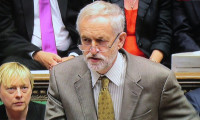
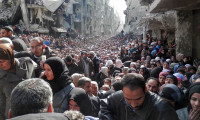
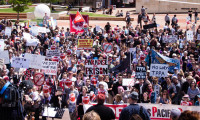
As I mentioned before, there is another powerful dimension to these photos and that is their relevance to today. Because even in 2015, war continues. Take your pick of news story. In particular, I find myself reflecting on the fact that in some ways we should be alarmed that war continues to be a key feature of international relations. Despite its devastating implications for human life – or should I say because of its devastating implications for human life – war is still a widely-accepted strategy in politics. As much as I can understand that war can be necessary, it’s always difficult to fight the temptation of imagining a world where it is no longer the norm. Some politicians make out that the end of war is long-lasting peace, but it seems contradictory to state that war has the inherent ability to end all violence and conflict.
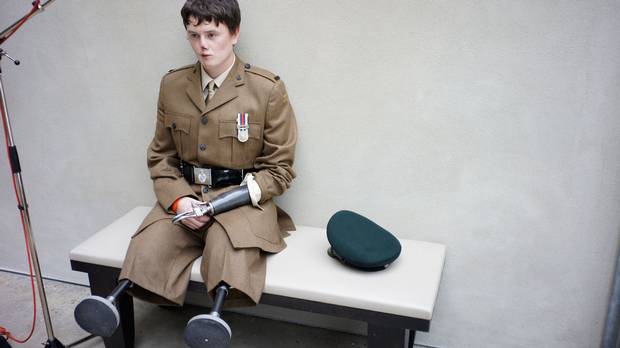
Wounded: The Legacy of War. Image Source: http://ind.pn/1ykCr2x.
While I’d like to state that I’m under no illusions about the nature of world politics, I will say that it’s a testament to Adams and the servicemen he photographed that “Wounded: The Legacy of War” makes one take time out to reflect on the practice of war and the indelible mark it has left on humanity, in many different ways.
It goes without saying that British action in Iraq and Afghanistan is highly controversial today, and I have discussed the continuing contestation and debate surrounding the practice of war to highlight the fact that works like these hold immeasurable significance in terms of giving us an alternative perspective of the heavily institutionalised political world of today. In spite of this, these issues are in no way above the immediate feeling of respect and common humanity one finds in looking at the portraits of the wounded British soldiers.
According to MoD figures, 493 deaths occurred in Afghanistan and 173 occurred in Iraq, mostly males aged between the age of 20 and 29. Over 220,000 armed forces personnel were deployed altogether, suggesting that there is a generation of people who have had their lives impacted in some way by Iraq and Afghanistan. This is a fact which serves as a reminder of the importance of remembrance of not just war, but also of awareness of its aftermath.
About the Author