
Just the way we cannot stand to see a hungry child cry for food, we are faced with a situation where there has been a prolonged cry to fill up the belly of a severely malnourished component in tackling climate change, this being finance. One of the most critical and indeed hottest topics in the climate debate. Promises have been made since Copenhagen in 2009 to shore up the financial war chest in order to sustain the fight against climate change, particularly in developing countries. By no means however have the intended targets been achieved, leaving the challenge of addressing climate change through a balance of mitigation and adaptation incredibly starved of the much needed resources.
One of the critical limbs that touches on finance has of course been Long Term Finance, a work programme that was aimed at making progress on the issue of finance. A product of the UNFCCC Conference of Parties 17 held at Durban South Africa, the programme was designed to contribute to the increased efforts to mobilise finance for climate action particularly after the year 2012. As it is, the period characterised by Fast Start Finance has already expired with much of the pledges made yet to be realised. Despite there being several processes and moves towards addressing the issue of finance with particular regard to commitments to this issue, the sad reality is that it has always been more a case of two steps forward and one and a half steps back, the result being little progress.
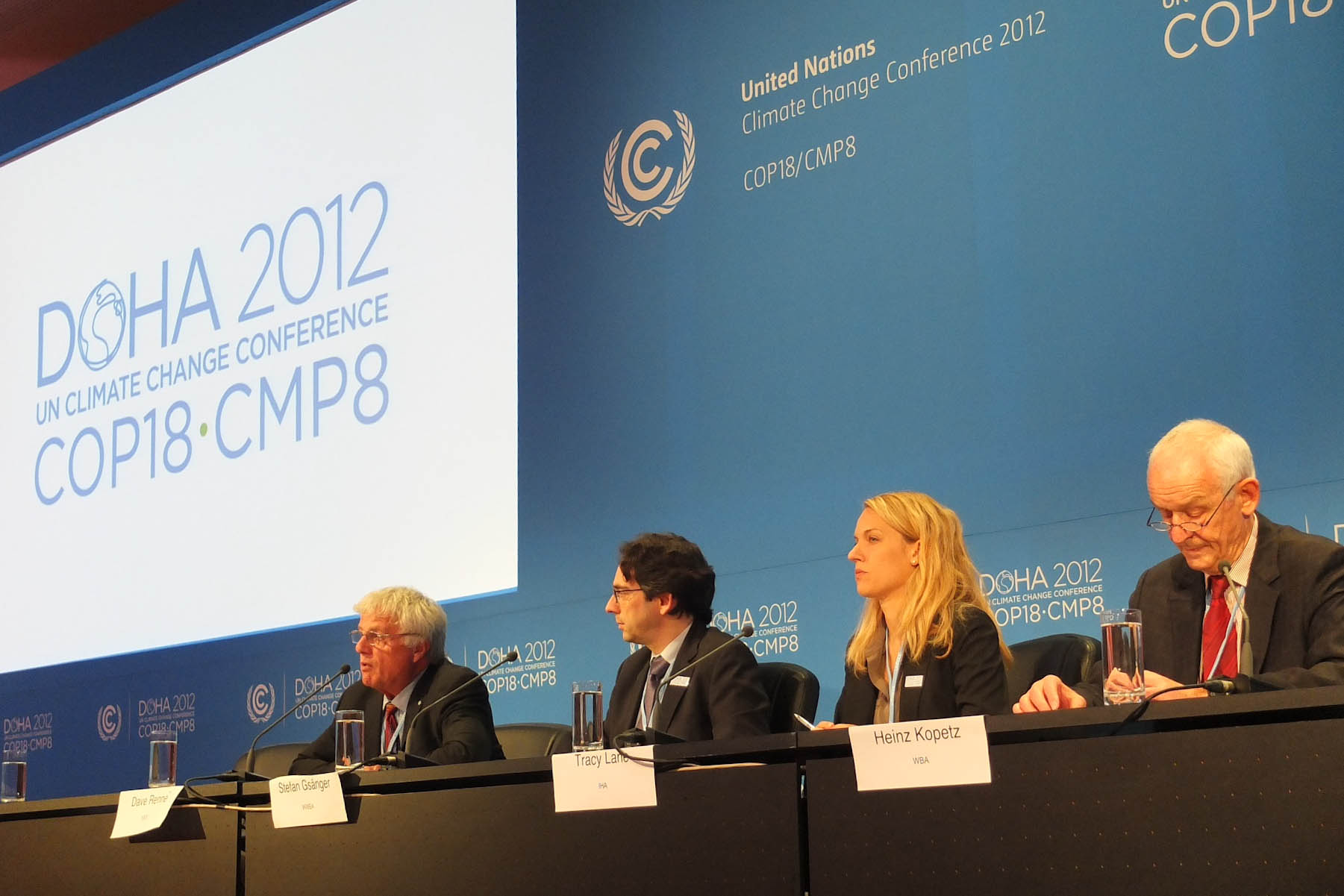
18th Conference of the Parties (COP 18) to the United Nations Framework Convention on Climate Change (UNFCCC)
Doha, 26 November – 9 December 2012. Image credit: International Hydropower Association.
In the upcoming climate change conference (COP19), to be held in Warsaw this November, the results of the Long Term Finance Work Programme will come into sharp focus. A key agenda for the programme has been enhancing the available resources and coming up with new sustainable sources of climate change finance. If they are to reach the $100 billion target by 2020, the demand for increased ambition and innovation needs to be heeded. If indeed we are to reduce emissions to the below 2 degrees target by the turn of the decade, then there must be adequate finance to facilitate this. Concrete mechanisms of providing the finance need to be worked on and developed countries especially have to do more than what has been done already. The empty shell that is the Green Climate Fund (GCF) still reminds us that more commitment is urgently needed if we are to achieve the climate change goals set out.
In the same regard, developing countries must act with the utmost urgency and efficiently if they are to maximize the funds available to them, as well as identify new and innovative sources of climate finance. Indeed this was a crucial part of the agenda in the second Long Term Finance workshop held in Cape Town South Africa in October 2012. The outcome of the discussion with be assessed at the High-Level Inter-ministerial meeting to be held at this years COP 19 meeting. The programme’s findings and subsequent discussions will have a great impact on determining whether or not we will move a step closer to filling up the empty belly of climate change finance.
Read all of our COP18 coverage here!
About the Author





