
The European integration project needs a restart. And if that restart is to be credible in the eyes of a new generation it must include input from that generation. This is why I have started a new think-tank in Brussels: the Next Generation for Europe.
This crisis may well be the beginning of the end. The European integration project has endured many difficult periods, always coming out stronger and more powerful. What is different this time is that trust in EU institutions is plummeting. Nationalism is on the rise, separatist movements are growing, EU-secession campaigns may soon be common. Solidarity between north and south is at stake. Alongside this backdrop there is also a generation missing from the European project. Globally connected but uninspired by Brussels leadership, integrating this generation and its ideas is key to stopping the EU institutions from unravelling.
We need a restart to make us heard. This is why I start a new think-tank, The Next Generation for Europe (NGE). Based in Brussels but connected with young thinkers all over Europe, the NGE does independent research and journalistic reporting on the position of young people in Europe. We have two focuses: a looming generational conflict as well as the potential for change and modernization of the European economy and society.
Our mission is to bring in fresh thinking and ideas into the EU policy making process. We will do that by executing our own research, but also by connecting leading young thinkers from around Europe with the EU institutions. All our projects will be based on transparency, open data and storytelling, and the outcomes will be available in the form of infographics, data visualizations and videos.
Make the case
In many ways the bright and energetic network generation (25-39) is standing up, ignoring the failing top-down structures and building its own future. These twenty and thirty somethings were born (or raised) after the Cold War. It’s an age group that looks radically different to the importance of borders and national cultures, thinks different because they are digitally wired from a young age. This radically different upbringing, and the passage of time, means that the old story of ‘peace and prosperity’ is no longer appealing. Why join institutions that fed a crisis when you can build your own networks and systems of social change, they ask. For them, a peaceful Europe is a given. And if you want to change something, you start at the bottom, not the top.
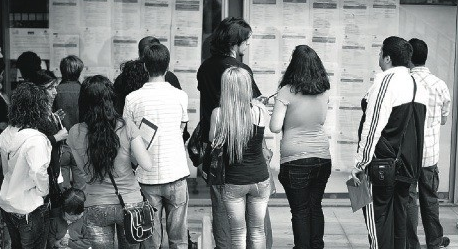
As member state infighting drags on, young people remain on the sidelines. Already 14 million of them are jobless and disconnected, costing Europe 153 billion euros a year. In the EU, youth unemployment has risen to an awfully high 23 percent. Young Irish, Spaniards and Portuguese are escaping the old continent. One in twelve of Irish twentysomethings will emigrate in 2012. The debate may be about young Europeans – a lost generation looms – but it doesn’t actually include them. Given their levels of education and today’s techonologies, that is a bloody shame.
The Commission and the European Parliament only have an incremental analysis of what young citizens think and fear, hope and believe. As a senior Commission cabinet member told me: ‘young people only appear in the margins of statistics.’ In the meantime, everybody in Brussels is looking for a new raison d’être for Europe, while forgetting to ask the network generation what they perceive as the core values of the EU.
For instance 92 percent of young Europeans think the meaning of the EU is the ‘freedom to travel, study and work anywhere,’ (Gallup, 2007) There are reasons to worry about the answers, but there are no reasons to ignore them. Especially if you look at the current EU budget debate: the member states continue the agriculture funds instead of investing in the future: education, innovation and competitiveness.
Fundamental mismatch
So there is a fundamental mismatch between the EU institutions and the network generation. It’s time to connect the two, because they are (and will remain) an indispensable tandem for Europe’s future. They will be the ones paying the bills of Europe’s social model in decades to come. Already the debt of the eurozone has risen from 60 to 90 percent in just four years. If the welfare state is to survive it needs strucural growth of the economy, up to 4 percent per year, and more importantly the continuing support of the working generations.
How do you connect these bureaucratic and vertically organized institutes in Brussels with a dispersed crowd of millions of young Europeans? The answer is not another lobby group, but a continuous interaction process from the institutes themselves. The network generation doesn’t need self-appointed spokespeople, when instead this generation can organize itself horizontally in the form of connected, crowd-sourced thinking. I am convinced that the EU institutions can profit immensely by tapping into an extensive group of ‘young thinkers’ from all over Europe. The method to be used is called ‘co-creation’ – a quite complex but very powerful tool to really engage with your clients, customers or citizens.
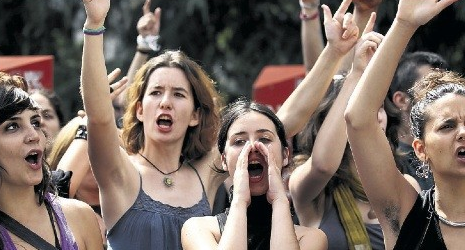
The Occupy Movement has shown us the way. The wrong way. These people just nested themselves on squares, called for abilition of ‘the system’ and smoked weed. I have visited them several times and it really depressed me. Is this the way young people make themselves heard?
How to restart Europe
What if we – the next generation – choose the hard way: by consistently and constructively feeding the relevant policy debates with young opinons that matter. Not just in Brussels where the Commission and Parliament would do well to really start listening to us. Not by advocacy but by doing research, realising open data projects and gathering stories on being young in Europe. We also need to be active in our home countries, where often the debate on Europe is lacking. A real voice of young people has to cover both levels of debate, only a network and crowdsourced thinking can achieve that scale.
So how do you bring together all these ‘young thinkers’ and prevent the co-creation process from turning into a useless shoutbox? First of all, you need a critical mass and a online platform where they can engage. Second, you have to ask the right questions: for instance, what should the EU do about copyright protection or the connection of education to labour markets. And the next step is crucial: the guys that are responsible for taking decisions, have to talk back.
As the crisis rolls on, we have to act. As a young designer told me: ‘I want the EU to become a perspective again. Something that we can support, over which we can argue, but not it’s just about money distribution.’ The European integration project needs a restart. And if that restart is to be credible in the eyes of a new generation it must begin with a ‘re-think’, which is inclusive of the ideas and aspirations of that generation. They deserve a central – and permanent – role in the policy debates in Brussels – and beyond.
About the Author





