
1) Rise of the #ElectionDaySelfie
One of the not so surprising phenomena that featured around election time in many countries was the taking and uploading of ‘Election Day’ selfies to social media pages. Instagram and Twitter hashtags read #VotingSelfie or #ElectionDay from the European Union election to elections in Ontario, Canada and many others. When the hashtags blew up online, some governments asked voters to refrain from taking these selfies because of privacy rights related to voting. Although there are no actual rules against taking a picture of yourself voting, some governments have remarked that it is a criminal offense to show how someone has voted or will vote.
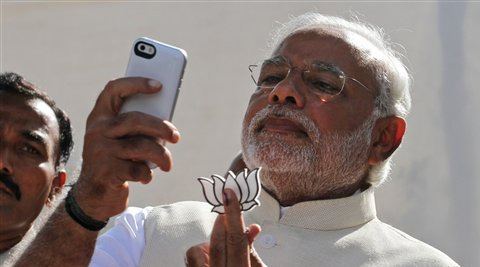
Indian Prime Minister Narendra Mod. Image Source: http://bit.ly/1AlV9Mt
2) Japan’s Snap Election
Prime Minister Shinzo Abe called for an election two years ahead of schedule, subsequently winning the majority for his party (Liberal Democrats) and even gaining more seats. With the economy in recession, ‘Abenomics’ at the beginning of 2012 had been working to boost the Japanese economy, however when a sales tax was introduced it had the opposite effect and Japan went into a recession. The economy is one of the biggest issues for Japan (and any country), however the reelection of Abe does not necessarily mean that voters are more in support, even in a struggling economy. The impromptu nature of this election is a very interesting occurrence in the 2014 list of elections, particularly since Abe still had a significant amount of time to see his policies through. He was able to gain more seats than he originally had, seemingly meaning that his policies are more likely to get pushed through with more ease, which appears to have been a strategic move on the PM’s part.
3) Republican’s Dominate US Midterm Elections
In early November, voters went to the polls and it seems as if many Democrats refrained from voting this election cycle. The Republican Party has struggled with its image in the last few years, but seemed to push forward flipping some blue leaning states to red and gaining majority in the Senate. While early polling results already gave Republicans majority winning results, it still came as a hard blow to Democrats. With the GOP majority in both the House and Senate, US politics appears to have a couple of interesting days ahead as Obama nears the end of his term and the 2016 candidates make themselves known.
4) Latin America goes to the Polls
Not only was there an exciting World Cup in Brazil this summer, seven Latin American countries went to the polls for Presidential elections, most leaning towards leftist policies. Voter turnout in almost all countries exceeded half, three had over 80% turnout including Brazil, Uruguay and Bolivia and Colombia had the lowest with less than half turnout. Leftist parties succeeded in many countries including Brazil’s Dilma Rousseff of the Worker’s Party was reelected as President; Evo Morales won a third term in Bolivia; Chile voted Michelle Bachelet for President and Uruguay voted Tabaré Vázquez. Conservative governments seem to be waning as leftist parties re-gather momentum after the loss of leader Hugo Chavez last year. El Salvador, Panama and Costa Rica also went to the polls; the former two countries Vice Presidents’ succeeded in winning.
5) EU Elections and Rise of Euroscepticism
The citizens of the 28 members of the European Union voted on MEPs and the institutions’ leaders. A low 43% of registered voters came out to vote, even when the vote related to issues like the controversial economic bailouts. Extremist and far right parties in member states, such as Greece, the UK and France gained a large amount of seats in the parliament, emphasising the increase in Eurosceptism that threatens the European Union. The more nationalist or Eurosceptic sentiments are realised through elections, the more it seems to be plausible for the EU to see an exit of members, unless there is reform.
6) Scotland Votes No
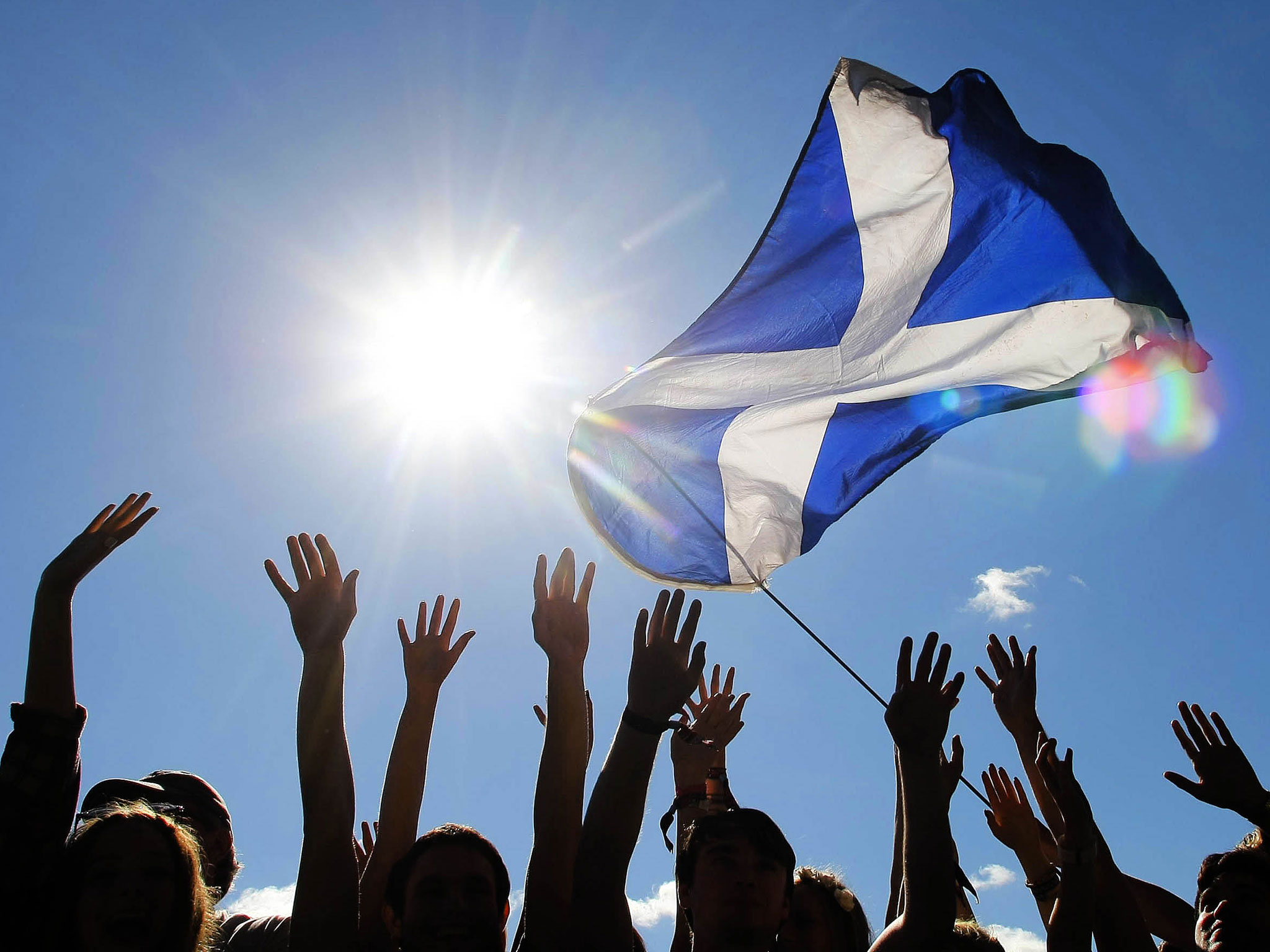
Scottish Independence vote. Image Source: http://ind.pn/1yeQ0WY
The campaign for and against Scotland’s independence from the United Kingdom had a very exciting and proactive year leading up to the referendum vote. Issues with this referendum ranged from agriculture, the currency, NATO membership, the economy, and EU membership, amongst other important issues for any country debate about before a vote. While Scotland voted no for independence with about 55% majority, pro-independence activists (part of the ‘Yes Scotland’ campaign) did not stop campaigning, protesting for a revote even after SNP leader Alex Salmond officially resigned in the days following.
Violence broke out in Glasgow following the results as well, a troubling consequence from the vote. However, the increase in political activism across Scotland, as well as the amount of registered voters that turned out, above 80%, is a great indicator for the success of democratic process in the referendum.
7) India Votes Modi
India, one of the rising economies and largest democracies in the world held a General Election to elect a leader that would continue to ensure the country’s rise. The results, the leader of the Bhartiya Janta Party (BJP) (the Hindu Nationalist party), Narendra Modi came out on top, but not without consequence. There is a division from younger voters, the classic troubles of corruption and poverty and potentially aggressive religious divisions between Hindus and Muslims that could cause tensions. In a country that has so much potential, Modi has a lot of issues to tackle and many voters that have put their trust in him to strive for India’s economic and social development.
8) Middle Eastern Election Troubles
In several of the elections to take place in the Middle East, elections have had to deal with much more issues than other democratised elections this year. Afghanistan was just one of the countries that ran into issues trying to hold its first democratic election. Tunisia and Bahrain, Israel and Sudan have all had their own problems dealing with elections, including violence, protests, corruption and voter fraud. These countries are often a reminder that holding democratic elections are not all easy and that elections do not necessarily mean that a country will have easily transitioned governments, particularly when radical groups terrorise citizens.
9) Russian Influence in Eastern European Elections
Ukraine and Moldova both had elections this year and both seemed to have had to deal with pro-Russian parties and influence in electoral politics. Though both had pro-Europe and pro-Western parties that managed to gather a majority vote, staving off Russian influence. Ukraine’s crisis resulting in both the annexation of Crimea in March 2014, the ‘Euromaiden’ movement to create closer ties to the EU and created nationwide unrest and violence. The Ukraine election ousted then current President Yanukovych and resulted in Petro Poroshenko winning the presidency, even with pro-separatist/pro-Russian protests impeding elections. Moldova likewise managed to gather nearly 55% majority in favor of pro-European parties, although this former Soviet republic is still divided between what Russia can do for them versus what the EU can do for them.
10) U.S. All About the 2016 Candidates:
Lastly on the top ten stories of 2014, it seems appropriate to look towards the future of election and campaigns, so as the year comes to an end many will have one question on their mind: Will Hillary Clinton stand for election? This year the media has reported on nearly every move the former Secretary of State has made and with her summer biographical book, many are waiting for the year’s end to find out the answer to that question, the Hillary Hysteria has not ceased. It seems unlikely that Clinton would pass up an opportunity where polls show she has a majority to win against all other candidates, both Democrat and Republican. Other potential candidates have been making headlines, including Jeb Bush (R-FL), Rand Paul (R-KY), Vice President Joe Biden, Elizabeth Warren (D-MA)(although she has come out against running), amongst others. The time for Clinton’s decision comes closer as many in the U.S. and globally have impatiently waited, the likelihood is quite high considering the polls, however in today’s political climate it does not necessarily mean she will be the hands down Democratic nominee. As in the 2008 Election, then Senator Obama came up from behind with a more progressive and youthful campaign than Clinton had expected, which helped win him the nomination. Clinton may consider a New Year’s Resolution to not underestimate the non-contenders as she had done in her previous campaign, as well as not underestimating the rising liberals like Elizabeth Warren and the populist movement emerging in the Democrat party.
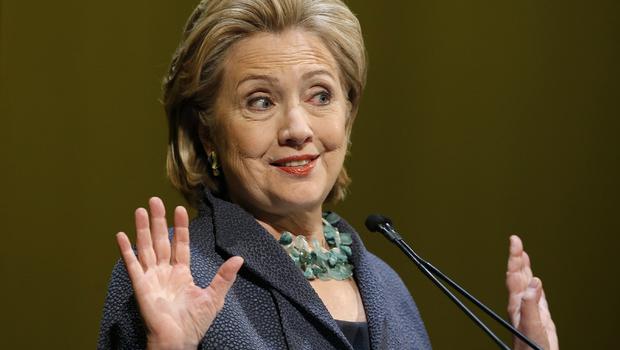
US Secretary of State, Hillary Clinton. Image Source: http://bit.ly/1K6puTk
This year has seen the rainbow spectrum of global electoral politics. New democracies have struggled to transition and evade corruption in elections, anti-establishment and nationalist sentiments have arisen in the European Union, citizens trust in the uncertainty of economic platforms and the results of the influence of social media. People have voted ‘better together‘ than apart and have put trust in candidates to see economic plans spread the wealth and diminish social inequalities. The democratic process has been tested and as the year ends and a new one begins there are new and even more challenging campaigns and elections to come.





