
On New Year’s eve, Zambia’s President Michael Sata addressed the nation in a speech that at first did not generate a lot of excitement among citizens until, bit by bit, it was picked apart by people with different interests addressed in it. However, what made people sit up was the two and half year old government’s intention to “set up” an Industrial Development Corporation.
“Employment creation remains our government’s topmost strategy for ensuring the stability of society and overall growth of the economy,” President Michael Sata proclaimed, further stating, “To this effect, our government will in the New Year (2014) establish the Industrial Development Corporation which will focus on developing labour intensive industries and enterprises in the key areas of agriculture, construction, manufacturing, tourism, science and technology.”
But for older generation Zambians, the mention of Industrial Development Corporation made them sit up as this meant the revival of a defunct conglomerate going by the acronym INDECO that existed 20 years prior which was dismantled when the Movement for Multiparty Democracy (MMD), which had defeated the socialist-oriented United National Independence Party (UNIP), came into power in 1991 on a free enterprise platform, selling off and even liquidating almost all state-owned companies that fell under it.
Other state-run conglomerates included Zambia Industrial and Mining Corporation (ZIMCO) which supervised other conglomerates and individual state-run companies including the mining giant of the time, the Zambia Consolidated Copper Mines (ZCCM), most of which were sold or liquidated under the MMD government. ZCCM was streamlined to become an investment holding company overseeing government shares in privatised mines.
What is not clear is whether the new INDECO will either start from the ground, bring all the existing parastatal companies under one umbrella or acquire shares in existing companies, after all President Sata’s Patriotic Front government started off by reversing the sale of Zambia Telecommunication Company (Zamtel) to Libya’s LapGreen by the previous government after it came into power in September 2011 in an election in which it beat the MMD after 20 years in office.
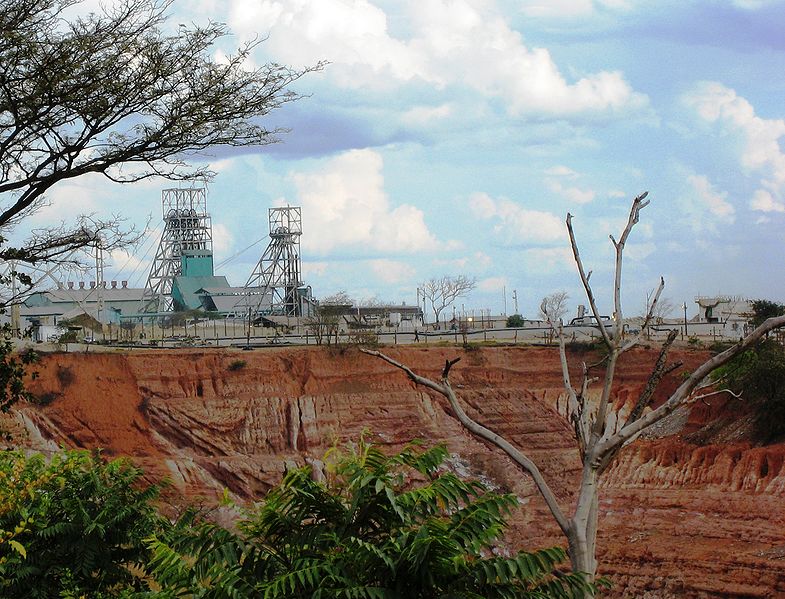
The major Nkana open copper mine, Kitwe. Image credit: Per Arne Wilson
Economic and business consultant Professor Oliver Saasa was among the first prominent people to condemn the government’s intention saying the re-introduction of INDECO needed to be properly thought out adding that the proposal would work against the liberalization process that Zambia had espoused.
Saasa said the INDECO route had already been tested and had failed the country and therefore did not need to excite anyone.
Job creation and the statistics that are announced by both the government and interested parties are always an emotional subject which could have been the reason why President Sata attached it to the announcement of the establishment – or rather the revival- of INDECO.
A Zambian diplomat attached to the High Commission in the UK, Amos Chanda, challenged about the INDECO reintroduction and the role of the Zambia Development Agency on Facebook, saying:
The nation will wait and see where the INDECO vehicle goes if at all it takes off.
About the Author





